
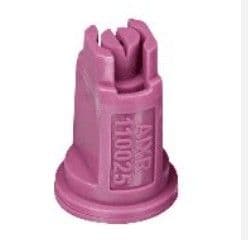
Get ready for autumn sprays: picking the right low-drift nozzles
Autumn spraying asks a lot of your kit. Pre-emergence residuals need even soil coverage with
minimal drift. Post-emergence jobs need canopy penetration without fine misting off target. The
right nozzle and shut-off setup can make the difference between clean headlands and costly
misses.
This guide runs through low-drift and twin-fan options from Hypro, TeeJet, Lechler and Billericay,
explains drift reduction classes and pressures, and shows how to match nozzle bodies and
valves to reduce overlap and improve coverage. It finishes with practical set-up tips for boom
height, speed, water volumes and maintenance.
SPS supplies nozzles, caps, bodies and shut-off solutions for most makes, with phone support if
you want a second opinion. Not everything we stock is listed online, so if in doubt, call.
Start with the job, then pick the spray quality
Think first about the target and timing.
- Pre-emergence herbicides: aim for even soil coverage and low drift. Medium to coarse
spray quality with air-induction is typical.
- Post-emergence contact herbicides: need leaf coverage and some angle to hit vertical
targets. Medium spray quality is common, sometimes fine to medium on a still day; many
operators choose twin-fan low-drift to balance coverage and drift control.
In the UK, drift reduction classes are commonly quoted at 50%, 75% or 90% according to
LERAP or manufacturer data. Higher classes indicate coarser droplets and lower drift potential
at stated pressures and speeds. For pre-ems, 75% or 90% reduction nozzles are often
preferred. For post-ems, 50% to 75% can give better coverage while still managing drift.
Nozzle families compared: Hypro, TeeJet, Lechler, Billericay
Across brands you will find similar patterns with different naming. Typical autumn picks:
- Flat fan: simple single fan. Good coverage, higher drift risk at higher pressure. Suitable
for sheltered post-em in light winds and correct boom height.
- Low-drift or air-induction (AI): venturi draws air into droplets to make coarser, drift
resistant spray while maintaining deposition. Favourites for pre-em and many post-em
passes.
- Twin-fan: two opposing fans, often 30 degrees forward and back, to improve coverage
on vertical targets at lower pressure. Available with air-induction for reduced drift.
Examples to consider:
- Hypro GuardianAir (AI) for pre-em; GuardianAir Twin for post-em contact work where
drift control is needed. Hypro ProStop and ProStop E shut-off options pair well with
Hypro bodies.
- TeeJet AI TeeJet, AIXR for low drift; TwinJet or TTI Twin for twin-fan coverage.
ChemSaver bodies offer quick shut-off at each outlet.
- Lechler ID and IDK for air-induction; IDTA for twin-fan air-induction coverage. Lechler
has clear drift reduction data, which helps with stewardship plans. See our range of
Lechler nozzles if you want side-by-side options.
- Billericay Air Bubble Jet and BFS Exray XC low drift nozzles are proven UK choices;
BFS 5 Star for liquid fertiliser.
Tip: check the manufacturer’s pressure window for the droplet spectrum you need. Most AI
nozzles hit their designed spray quality around 2 to 3 bar; twin-fan AI models often work well
between 2 and 4 bar. Running too high can shear droplets finer, raising drift; too low can cause
streaking.
Choose the right size and pressure
Match nozzle size to target water volume and speed. As a rule of thumb for 100 to 200 L/ha
autumn work:
- At 12 km/h and 3 bar, a 03 to 04 size often suits 100 to 150 L/ha.
- For 200 L/ha at similar speeds, consider 05.
Always confirm with a nozzle chart. If you adjust speed or volume, re-check pressure so the
nozzle stays in its recommended droplet class.
Twin-fan versus single-fan in autumn
- Pre-em: single-fan air-induction nozzles are typically chosen for low drift and even soil
coverage.
- Post-em: twin-fan AI nozzles, such as GuardianAir Twin or Lechler IDTA, can improve
coverage on small upright leaves and tillers while maintaining a 75% to 90% drift
reduction at the right pressure.
Boom height, forward speed and water volume
- Boom height: set to 50 cm above target for 110 degree tips unless the manufacturer
states otherwise. A stable 50 cm height improves overlap and reduces drift.
- Speed: steady speeds improve pattern stability. If conditions are breezy, consider
dropping speed and pressure to keep droplets coarser.
- Water volume: pre-ems often perform well at 150 to 200 L/ha for residual herbicides.
Many post-ems run between 100 and 150 L/ha; raise volume when coverage matters or
conditions are marginal.
Valves, nozzle bodies and how they cut overlap
The valve at the nozzle body determines how cleanly the flow stops. Options include:
- Single, triple and 5-way nozzle bodies to let you switch tips quickly for changing
conditions.
- Shut-off valves at the body, such as Hypro ProStop and ProStop E, or TeeJet
ChemSaver, which reduce dribble and cut off lag at section shut-down.
- Non-return options keep lines primed and prevent backflow, limiting pressure fluctuations
that can disturb patterns.
A clean, instant shut-off reduces over-application at headlands and overlaps. On multi-way
bodies, fast-change positions let you move from pre-em AI to post-em twin-fan without tools, so
you stay in the right droplet class as wind or target changes.
Caps, seals and filters
Worn caps or perished seals cause weeps and pattern distortion. Before autumn:
- Replace any flattened O-rings.
- Check cap threads and clip faces for damage.
- Clean or replace nozzle strainers. Match mesh size to nozzle type to avoid starvation at
low pressures.
Inline strainers protect the boom from debris and help nozzles maintain their pattern. If you need
replacements, see our inline filters and sprayer filters for options.
Common spray nozzle problems to catch early
- Streaking or banding: incorrect boom height, blocked strainers, or running below the
nozzle’s pressure band.
- Excess drift: pressure too high, boom too high, using a fine spray quality in wind.
- Uneven fan pattern: worn tips, damaged caps or seals, or mixed tip sizes on the same
boom.
- Dribble at shut-off: tired diaphragms or no shut-off valve at the body.
- Poor coverage on vertical targets: single-fan only, no angle; consider twin-fan AI at
suitable pressure.
How to choose the right nozzle for your sprayer
Work through four steps:
1) Target and timing, pre-em or post-em, contact or residual.
2) Spray quality, pick the drift reduction class you need for the day.
3) Nozzle pattern, air-induction single-fan for soil, twin-fan AI for foliage where drift still
matters.
4) Size and pressure, check charts for your L/ha and speed, set pressure to stay in the
nozzle’s designed band.
If you are unsure between sizes, fit a multi-way body and keep both options on the boom. A
5-way body with a shut-off valve lets you switch in seconds without compromising cut-off.
FAQ
- How do I choose the right nozzle for my sprayer? Start with the job, pick a suitable spray
quality and drift reduction class, then size the nozzle for your volume, speed and
pressure using the manufacturer’s chart.
- What are the three types of nozzles for sprayers? For most field work, think flat fan,
low-drift air-induction and twin-fan variants. Each exists across major brands with
different names.
- What type of valve is used on nozzles? Body-mounted shut-off valves such as Hypro
ProStop or TeeJet ChemSaver are common. They reduce dribble and speed cut-off.
Non-return valves help maintain pressure and prime.
- How do nozzle bodies and shut-off systems reduce drift? By cutting flow instantly at
section or headland shut-off they prevent over-application and misting from dribble.
Multi-way bodies keep you in the correct droplet class as conditions change, further
reducing off-target movement.
- What are common spray nozzle problems? Drift from high pressure or fine droplets,
streaking from low pressure or blocks, uneven fans from worn tips or damaged caps,
and dribble from tired diaphragms.
Why source from SPS
SPS is a one-stop UK specialist for nozzles, caps, bodies, seals and shut-off systems across
Hypro, TeeJet, Lechler and Billericay. We back parts with on-farm support, calibration, repairs
and NSTS testing through our sprayer services team. If you cannot see a part online, call 01522
801651 or 02844 851509. Mobile 0044 7880 504996 is available 24/7, or email
jackie@sprayerpartsspecialist.co.uk.
You can also browse:
- Lechler nozzles for a wide range of air-induction and twin-fan options.
- Hypro nozzles, caps and seals if you are matching to ProStop bodies.
- GPS and guidance to reduce skips and overlaps when conditions get tight.
- Filters and pipe fittings if your pre-autumn check flags worn items.
Summary and next steps
For autumn, pair air-induction single-fans for pre-ems with twin-fan AI for many post-ems,
choose a drift reduction class that suits the day, and keep pressure within the nozzle’s sweet
spot. Run 50 cm boom height, steady speeds, and the water volume your label and conditions
require. Fit shut-off valves at the body to stop dribble, and keep caps, seals and strainers in
good order.
Need a hand matching a Hypro, TeeJet, Lechler or Billericay setup to your sprayer? Call SPS
for quick advice and parts, or send a message with your make, boom width and target job and
we will size a full nozzle and valve package for you. Links:
Lechler nozzles
https://www.sprayerpartsspecialist.co.uk/lechler-nozzles-55-c.asp
Hypro nozzles and parts
https://www.sprayerpartsspecialist.co.uk/pentair-hypro-nozzles-caps-seals--filters-46-c.asp
Teejet Nozzles
https://www.sprayerpartsspecialist.co.uk/teejet-nozzles--caps-85-c.asp
Billericay Nozzles
https://www.sprayerpartsspecialist.co.uk/billericay-farm-services-nozzles--dribble-bars-54-c.asp
Teejet GPS and guidance
https://www.sprayerpartsspecialist.co.uk/gps--guidance-7-c.asp, and
Fittings and filters